

Pumpkin, Red Lentil and Ginger Soup with Walnuts and Roasted Pumpkin Seeds
Prep time: 15 minutes
Optional soaking time: 2 to 4 hours
Cooking time: 30 minutes
Serves: 4 people
Ingredients
- 1 tablespoon olive oil
- 1 medium brown onion, finely chopped
- 2 cloves garlic, crushed
- 1 tablespoon fresh ginger, grated
- 1 teaspoon ground cumin
- 1 teaspoon ground coriander
- 750 g pumpkin, peeled and chopped
- 1 medium carrot, chopped
- ¾ cup red lentils, soaked and rinsed
- 1 litre vegetable stock or homemade broth
- ¼ cup walnuts, finely chopped
- Sea salt and black pepper to taste
- 1 to 2 teaspoons lemon juice, optional
Topping
- 2 tablespoons pumpkin seeds
- 2 tablespoons walnuts, roughly chopped
- 1 teaspoon olive oil
- Optional chopped parsley or coriander
Directions
If time allows, soak the red lentils in water for 2 to 4 hours. Drain and rinse before cooking.
Preheat the oven to 180°C.
Place the pumpkin seeds and chopped walnuts for the topping on a small tray. Drizzle lightly with olive oil and roast for 6 to 8 minutes until lightly golden. Set aside.
In a large saucepan, heat the olive oil over medium heat. Add the onion and cook gently for about 5 minutes until softened.
Add the garlic, ginger, cumin and coriander and cook for another minute until fragrant.
Add the pumpkin, carrot, lentils and stock. Bring to a gentle boil, then reduce the heat and simmer for 20 to 25 minutes until the vegetables and lentils are soft.
Stir in the finely chopped walnuts and cook for another 2 minutes.
Blend the soup until smooth. Season with salt, pepper and a small squeeze of lemon if desired.
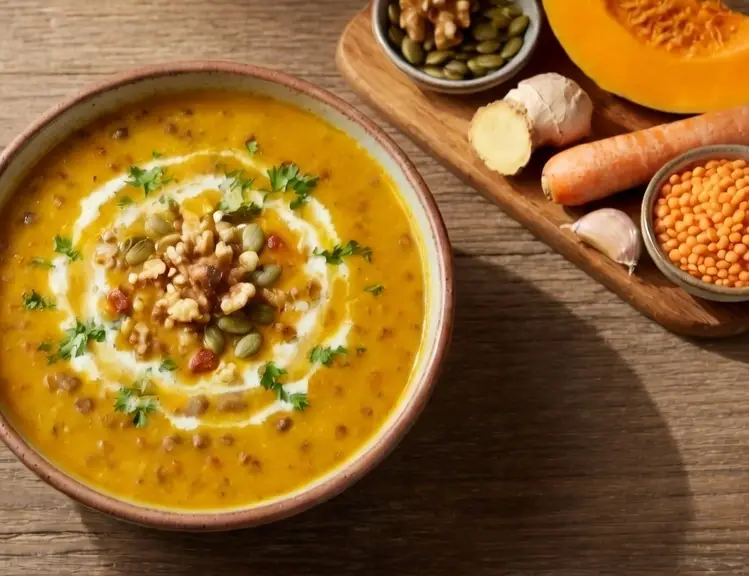
Serve warm and sprinkle the roasted pumpkin seeds and walnuts on top.
Why it works for your digestion
This recipe combines ingredients that support both the digestive system and the nervous system.
Red lentils provide fibre and plant protein, which help nourish gut bacteria. When gut microbes ferment fibre they produce compounds such as short chain fatty acids that help support gut health and intestinal function.
Walnuts provide healthy fats, polyphenols and magnesium. Research has shown that regular walnut consumption can alter the composition of the gut microbiome and increase beneficial butyrate producing bacteria.
Pumpkin seeds contribute minerals including magnesium, zinc and iron. These minerals are important for nerve signalling, energy metabolism and immune function, making them supportive foods for the nervous system.
Magnesium in particular plays a role in hundreds of enzymatic reactions in the body and supports muscle relaxation and nervous system regulation. Pumpkin seeds are one of the richest natural food sources of this mineral.
Ginger is traditionally used to support digestion and studies show it may help stimulate gastric motility, which can support digestive comfort in some individuals.
Together these ingredients create a warm, nourishing meal that supports gut health, provides key minerals for the nervous system and fits well with the slower rhythm of autumn eating.


